
When it comes to furnishing your office, you will quickly find that there are a wide variety of styles of furniture. It can seem overwhelming at first. After all, you need furniture that will play more than one role. It needs to be functional. Employees need the right tables, chairs, desks and other items to do their jobs. The furniture needs to be inviting, especially if you are furnishing a conference room or a reception area. The office furniture also needs to set the tone in your office while complementing your d©cor. This means that you need give furniture purchases serious thought.
There are several common types of furniture styles that you should be familiar with when you’re shopping. Styles can be broken down into extremely specific categories, but generally speaking, the common styles are contemporary, casual and traditional. Understanding these styles will help you pick out the right pieces for your office. You’ll be able to find the furniture you need which will blend in with the rest of your office and help set the tone you want in your office.
 One thing that it’s important to understand is that you make a decision about the style for your office. Traditional, contemporary and casual furniture do not blend well. You need to make a decision about which style you prefer. Many people work with an interior decorator to decide on their office style because it involves so many different elements. These include the furniture, the flooring, the wall colors and artwork.
Traditional furniture is a great choice for offices that want to send a message of stability and dependability. Many people also love the enduring style of traditional furniture and the atmosphere it creates. It’s a common misconception that traditional furniture has to have a certain style, such as overly large, ornate or overbearing in some way. In reality, traditional furniture can be casual and classic at the same time.
Traditional styles of furniture are predictable. The pieces of furniture match and are placed in an orderly fashion in the office. When offices are decorated in a traditional style, the rooms are free of chaos. The advantage of this type of decorating is that is comfortable for people of all age groups and sensibilities. The furniture is created with classic lines and edges are smooth and soft. Furniture fabrics tend to be muted and aren’t overly textured or styled. There may be patterns or decorations, but they are subtle. Colors are usually in sedate colors without extremes.
Contemporary furniture is also known as modern furniture. It’s a style of furniture that is focused on keeping up with the latest trends. Contemporary styles change quickly, so it’s important to keep in mind that you’ll have to update your office furniture more often than you would have to if you chose a more traditional style. Contemporary doesn’t have to mean uncomfortable even though the style is generally more uncluttered than traditional or casual styles.
 Contemporary furniture is sophisticated. The colors are usually neutrals like black and white which are accented with bolder colors like red. Many offices with contemporary furniture have blank or neutral walls and use them as a backdrop. The pieces are minimalist meaning it has soft curves and clean lines. In some cases, you’ll have the option of choosing of bright colors or unusually shaped pieces.
Contemporary furniture is great for creative offices, but may not work for more traditional industries. Casual furniture is comfortable and inviting. It’s only appropriate for certain types of offices. For example, it isn’t appropriate in a legal office or an accounting firm. But, for some types of offices, a more casual environment may be appropriate. Pediatricians often choose to have casual, fun furniture in their offices to make children more comfortable. Counselors sometimes use casual furniture so that clients can relax and talk openly.
The primary function of casual furniture is comfort. This type of furniture has simple details and features soft curves and primarily has rectangular shapes. Many different elements can be blended together in the room and furniture does not have to match precisely. Decorators often blend casual furniture with vintage accessories and art. Look for soft fabrics in neutral colors with inviting textures.
 We often do not take into consideration how profitable a mobile desk can be in any workplace. This is especially true in innovative circles; places like ad agencies or where creative engineers gather. Imagine rolling your work area to where the meeting is, so that all can collaborate on projects together. Mobile desks allow that to happen as often as is needed. This means an elaborate creative project does not have to be carried from one area to another; it can be rolled to the very spot in which it’s needed. It also means that everyone can be immediately working on what is in front of them, all at the same time, without delay.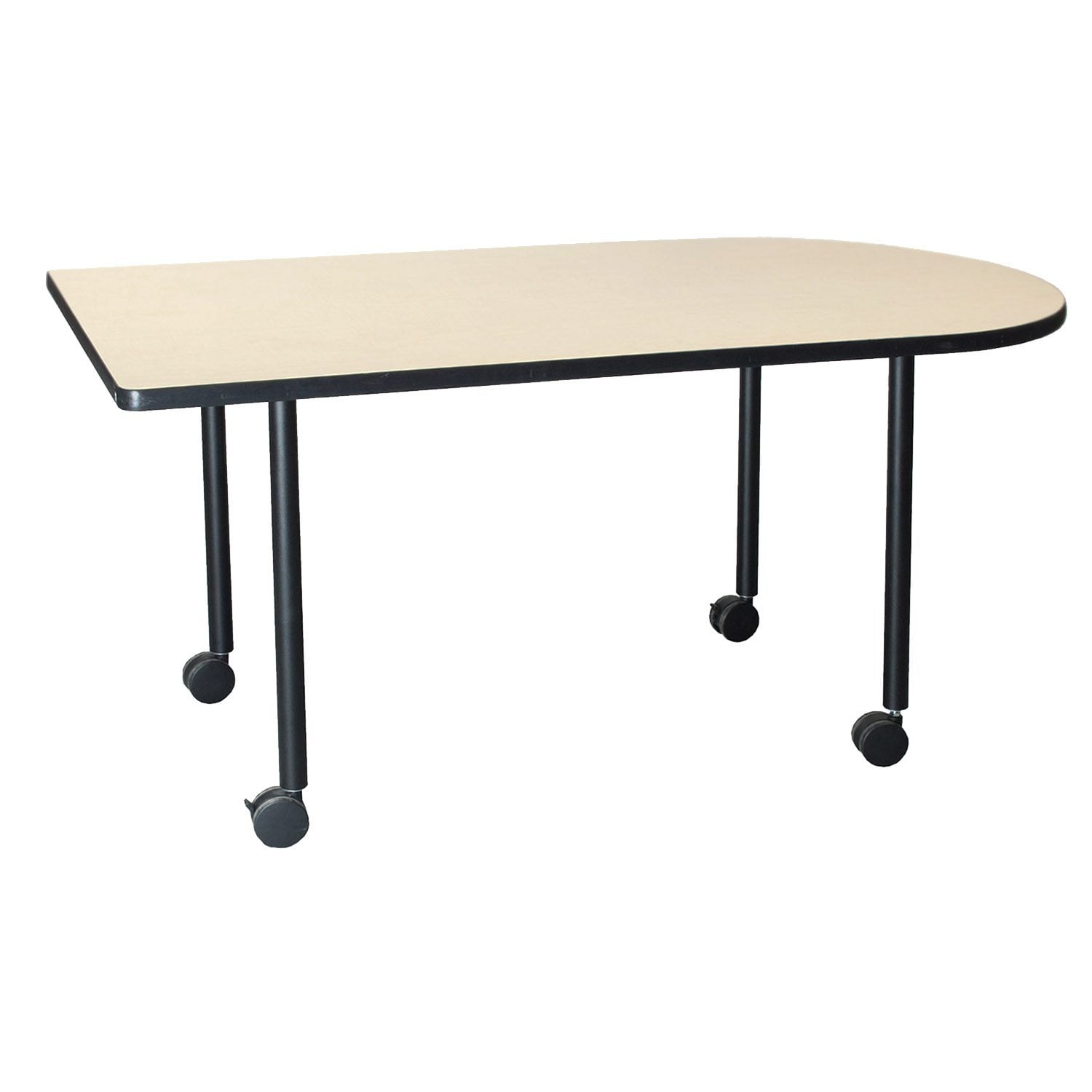
 An ergonomically designed chair is created with the human body in mind. The chair should work with your body, not against it.
 Another important element when it comes to chairs is comfort. People are much less productive when their office furniture doesn’t feel good. Chairs should have comfortable arms and backs; the backs should fit the environment and person. In warmer climates or offices many prefer a mesh back, others a solid padded back. Most people prefer to have wheels on their office chairs, so they can be mobile and easily maneuver at their desk.
 What are the elements of good ergonomic seating? Seats should be adjustable to meet the needs of differently sized and shaped workers. The first is lumbar support; Steelcase and Herman Miller have excellent lumbar support that the most petite worker and heavier team members will be comfortable in. There are chairs that are designed to provide support for the person’s lower back. These chairs also relieve the stress on these areas of the back when the person is sitting.
 Criterion
 The Think chair is Steelcase’s answer to comfort. Its plastic frame also means the Think chair is lightweight and easy to move. Made with 3D knit back upholstery that is designed to move with the user’s body with what they call the integrated “LiveBack System”. It conforms to the user’s weight, so that they can settle in quickly with only a few manual adjustments. The Leap comes in two versions:
 People are afraid of making a mistake. They don’t want their choices to clash or to be too bold and they want to make the best impression, while still enjoying the space they must work in each day. Another reason people avoid color is because those around them avoid it too. They have seen others fail at the attempt and don’t want to make the same errors. In order to avoid such issues, we need to see what those who use color the most already understand.
 Adding color does not mean you have to completely change your decor. Extreme change can be fun, but is not always necessary. Think about your company’s advertising color scheme and if that might work within your business as well. Color can be added to pieces of furniture or achieved by incorporating it into the overall decor. Try adding something that is easily removed like a throw pillow when you begin. That way you can embrace a little color into your space and see if it works for you. Then change it out if it doesn’t work for you. Some people choose to hang swatches of a color they want to see if it would work for the wall or the upholstery. This gives them a chance to visualize the new look without fully committing to the change. I suggest using large swatches over small for this to get a better idea of what it might truly look like.
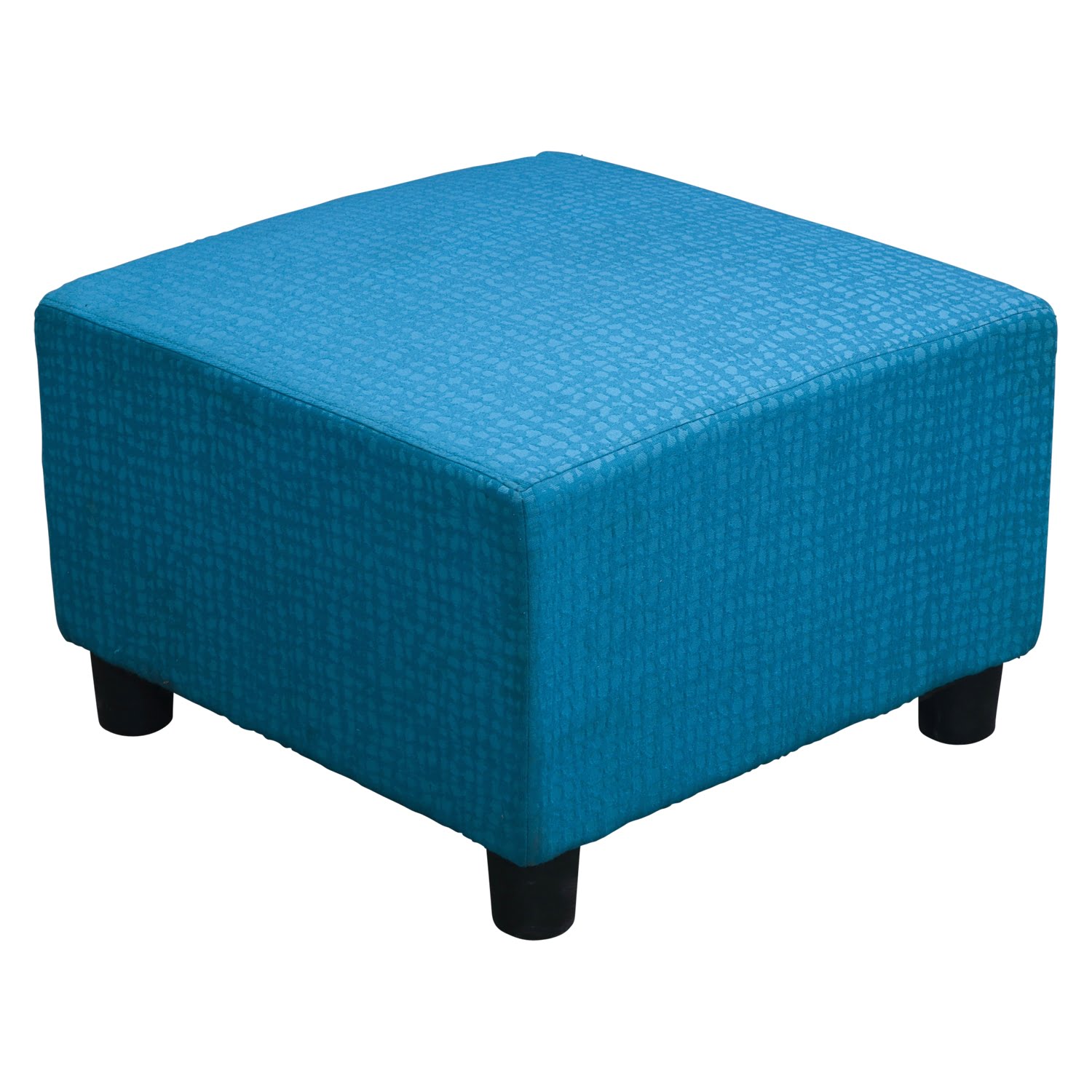 Generally, it is best not to saturate a single area like a wall in bold solid colors, especially if they are not bright. Some colors while great in small spurts or as accents are not good to use large areas. It can create an atmosphere where it is difficult to concentrate, or can cause anxiety. The same can be said for very light sterile looking areas. One way to overcome these issues is to use shades in the same color pallet in your design. This will add some dimension to the space, as well as bringing some brightness to the area.
 Chairs are another critical part of an executive’s office furniture. An executive should have a comfortable, attractive chair. Most people choose a chair made of leather or an attractive fabric. The chair should be well-made and comfortable. The seats around the meeting table should also be comfortable and well-constructed. The chairs should not be torn or wobbly as this will make a bad impression. The table should be free of scratches and stains. The table should also match and complement the chairs.
 Short cubicles are becoming popular choices. These cubicles have the advantage of providing a private workspace while still allowing users to collaborate with colleagues easily. These cubicles don’t have to line up side by side and cover the entire floor space of the office like more traditional cubicles did. Instead, the cubicles can be arranged in small pods or line the edges of walls, depending on your company’s needs and the work environment you want to create.
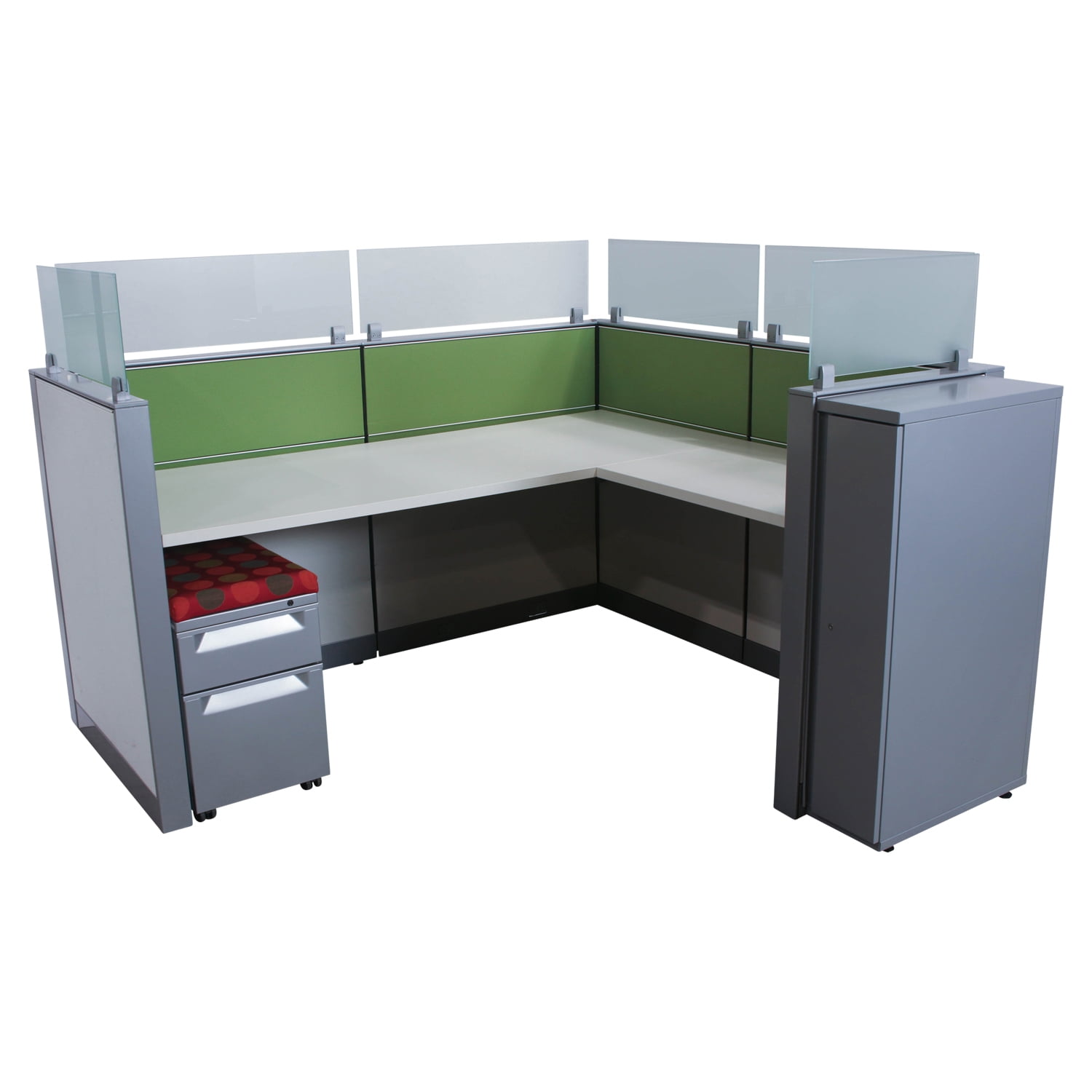 Another advantage to office furniture like shorter cubicles is that it can be quickly reconfigured to accommodate changing needs. Often, modern teams change rapidly. Workers need to move to new spaces or may temporarily relocate to a different space for a specific project. Your office furniture needs to accommodate these types of changes so that team movement and changes in size are simple to accommodate. Offices tend to change character quickly when teams change so you should create a space that is tailored to make changes.
 Many business owners add additional pieces of office furniture to the conference room for various reasons. You may find that a wide lateral filing cabinets work well in your conference room. These cabinets can also double as tables. The advantage of having a filing cabinet in your conference room is that you can easily access information that is relevant to meetings while you’re in the room. You can also store items in cabinets that you may need during some meetings but not others. These may include projectors, lecterns, notepads, pens, pencils and other relevant items. You can keep these items stored out of site when they’re not needed so that the room looks clean and neat. Then, when necessary, you’ll be able to access them quickly.