

Conference rooms are an important part of every business location. The rooms are used for a variety of different purposes including important meetings, training, sales meetings, customer meetings and many other purposes. When you stage a conference room, it’s important to focus on several issues. The room should be professional and inviting. The furnishings should be comfortable. You will need to provide furnishings and accessories for a variety of purposes.
 Many meetings require table space for attendees. There may not be enough room at the main table for everyone who needs a space. Participants may need to lay out materials or take notes. To make a conference room as useful as possible, make sure you have tables available for the maximum number of attendees. You should also ensure that you have plenty of chairs for participants. The chairs should be comfortable since people often have to sit in meetings for an extended period of time. Consider features like padding, back support and arms.
Training tables can be a useful addition to a conference room. They’re popular because they are so versatile. Different sizes of training tables can be used individually to set up presentation areas. When the conference room is used for informational sessions, training tables can be used to hold literature, training materials, business plans or other materials.
Training tables offer a variety of advantages for conference rooms. One of the best features is nesting. Many types of training tables nest neatly so that they can be easily stored when not in use. When the tables are set up, they can be linked together to create a workspace. You also have the alternative of placing the tables face-to-face. When you do this, the training tables work as a conference table. This can be a useful alternative to a standard conference table depending on how the conference room is used. If it’s an informal room, these tables are a good choice.
There are many accessories that can facilitate communication and collaboration during meetings. Some meetings require confidentiality. In these cases, you can purchase conference boards that can be closed when not in use. When the doors are closed, the room also looks neater and more organized. White boards are another popular option for conference rooms. These allow participants to take notes and erase them whenever necessary. Glass marker boards have become popular for conference rooms. They have a modern style and are decorative in addition to being useful.
 Storage space is another consideration when you are staging a conference room. You may need space to store supplies like erasable markers, erasers, pens, paper, flip charts and other items used during meetings. Having a space to store these items is convenient for meeting participants. Storage also helps keep the room neat when it is not in use. Consider technology needs for meeting rooms. It’s more and more common for people to bring laptops and other mobile devices to meetings. When meetings run long, people need to charge their technology. You can purchase tables with grommets that allow people to plug in when necessary. This will make meetings more productive because people won’t have to interrupt proceedings to attend to their equipment.
Consider the tone of the room when you’re making furniture and accessory purchases. You can find reasonably-priced chairs, tables, storage and other items that coordinate to produce the style you are seeking. Don’t use mismatching pieces as it creates a cluttered, unprofessional style. Instead, buy pieces that match or easily coordinate. You can find light, dark or muted tones that fit in with your company’s image and the style of the room.
Staging a training room can seem like a daunting prospect when it comes to budgeting. After all, in addition to furniture, you probably need to purchase audio-visual equipment, white or glass boards, decorate the room and possibly pick out flooring. Fortunately, you don’t have to purchase extremely expensive furnishings to create an attractive, professional room. Avoid purchasing materials from big box stores or traditional furniture stores. You should also avoid second-hand furniture that is damaged or out-of-style. This will make your conference look shabby and dated. Instead, consider purchasing materials from an office liquidator. You will be able to choose from brand new and high-end used items that will help you build a space you can be proud of.
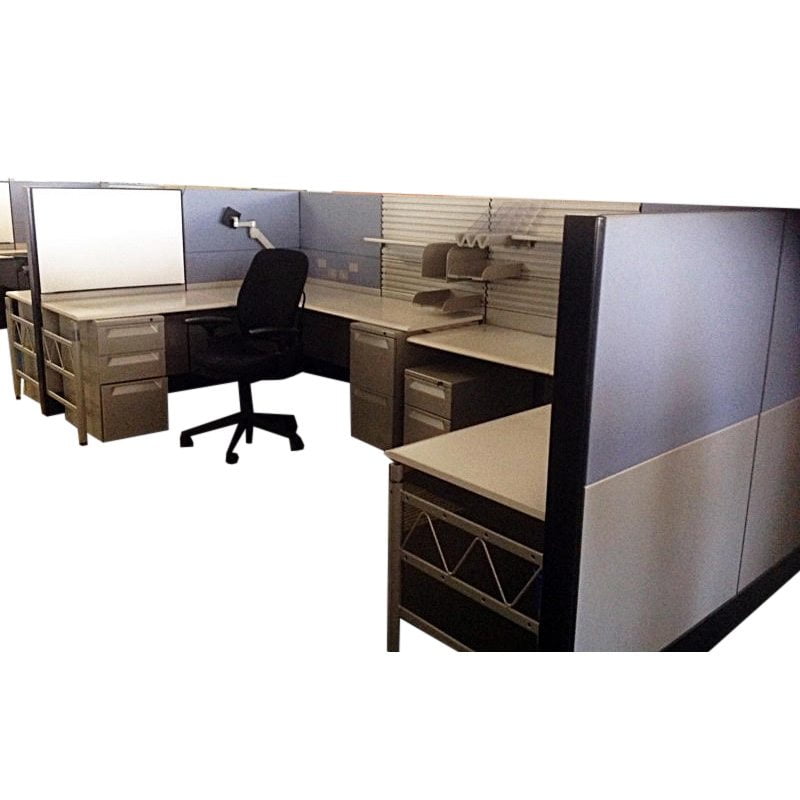 There needs to be a dedicated, open space for the team to collaborate. They won’t be able to work together if they aren’t close to one another. Team members can’t work together from cubicles or desks that are far away from one another. The collaboration area needs to be far away another from other desks and cubicles. This is important because other employees won’t be able to concentrate and complete their work if there is too much noise around them. The collaborating team shouldn’t feel restricted in terms of talking because there are other people around them. Some employers choose to put teams in designated rooms so they won’t disturb others. Other employers designate open space areas for teams that are located far from private work stations.
 Most modern office pieces share some similar design concepts. They are typically black, white, glass or feature certain types of wood. Chairs are often made of mesh or have unusual cushion colors. The design is minimalistic style. The overall style is simple and uncluttered. Furniture has few accents or decorations and is generally unadorned. This makes it easy to blend modern pieces together. Keep in mind, though, that modern and other furniture styles tend to clash.
 There are other details you can use in a conference room or training room to create a modern atmosphere. Did you know you can purchase glass marker boards? These look extremely modern. You can find them in unusual shapes. Some even appear to hover off of the wall which enhances the unusual effect. Whiteboards are available in a variety of styles. Some even have the capability to print the text and drawings that you have written so that you can save the information.
 Another important element when it comes to chairs is comfort. People are much less productive when their office furniture doesn’t feel good. Chairs should have comfortable arms and backs; the backs should fit the environment and person. In warmer climates or offices many prefer a mesh back, others a solid padded back. Most people prefer to have wheels on their office chairs, so they can be mobile and easily maneuver at their desk.
 What are the elements of good ergonomic seating? Seats should be adjustable to meet the needs of differently sized and shaped workers. The first is lumbar support; Steelcase and Herman Miller have excellent lumbar support that the most petite worker and heavier team members will be comfortable in. There are chairs that are designed to provide support for the person’s lower back. These chairs also relieve the stress on these areas of the back when the person is sitting.
 Short cubicles are becoming popular choices. These cubicles have the advantage of providing a private workspace while still allowing users to collaborate with colleagues easily. These cubicles don’t have to line up side by side and cover the entire floor space of the office like more traditional cubicles did. Instead, the cubicles can be arranged in small pods or line the edges of walls, depending on your company’s needs and the work environment you want to create.
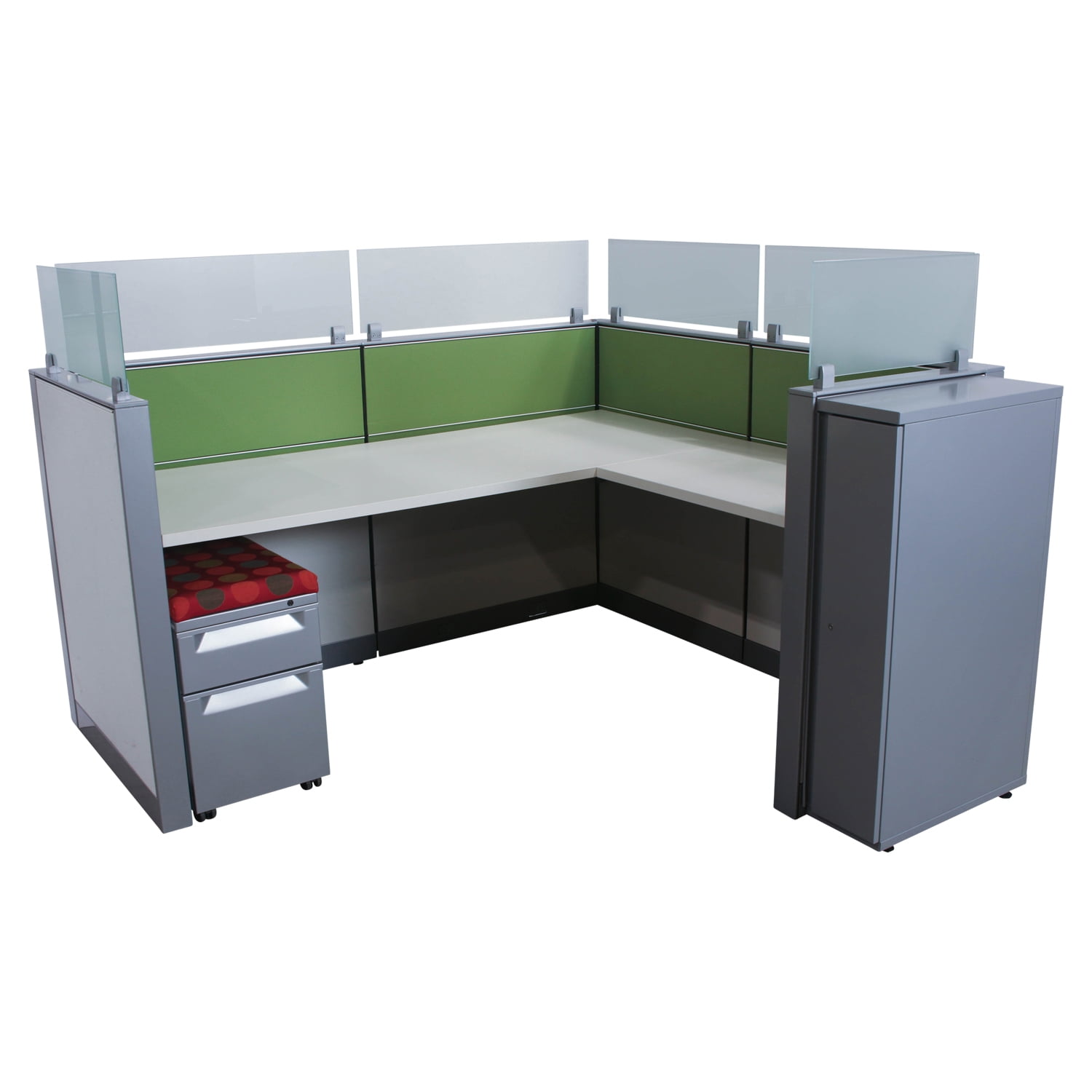 Another advantage to office furniture like shorter cubicles is that it can be quickly reconfigured to accommodate changing needs. Often, modern teams change rapidly. Workers need to move to new spaces or may temporarily relocate to a different space for a specific project. Your office furniture needs to accommodate these types of changes so that team movement and changes in size are simple to accommodate. Offices tend to change character quickly when teams change so you should create a space that is tailored to make changes.